Key takeaways
- Deferred deep linking routes a brand-new user to the exact in-app screen they intended to reach, even though they had to install the app in between clicking the link and opening it.
- The core problem it solves is a data gap: nothing in iOS or Android natively carries link context through an app store install, so a separate matching service has to reconnect the click to the install.
- Matching happens through deterministic methods (a referrer API or a clipboard token) when available, and falls back to probabilistic fingerprinting when it is not, and the choice between them is a real accuracy tradeoff.
What deferred deep linking is
A deferred deep link is a link that still knows where it was headed even after the user has to stop, install an app, and come back. Someone taps a link in an email, an ad, or a social post. If they already have your app, a normal deep link opens straight to the right screen. If they do not, deferred deep linking is what makes sure that after they install and open the app for the first time, they still land on that same screen instead of your generic home screen.
The name describes exactly what happens: the deep link is deferred, held in a waiting state, until the install completes and the app opens for the first time.
Why this needs a separate mechanism at all
It would be reasonable to assume the operating system handles this, since it already handles standard deep links so well. It does not. When a user without your app clicks a link, both iOS and Android route them to the app store, and that trip is largely a dead end for data. Neither app store natively hands the tapped link's destination to the freshly installed app the way an already-installed app receives a deep link.
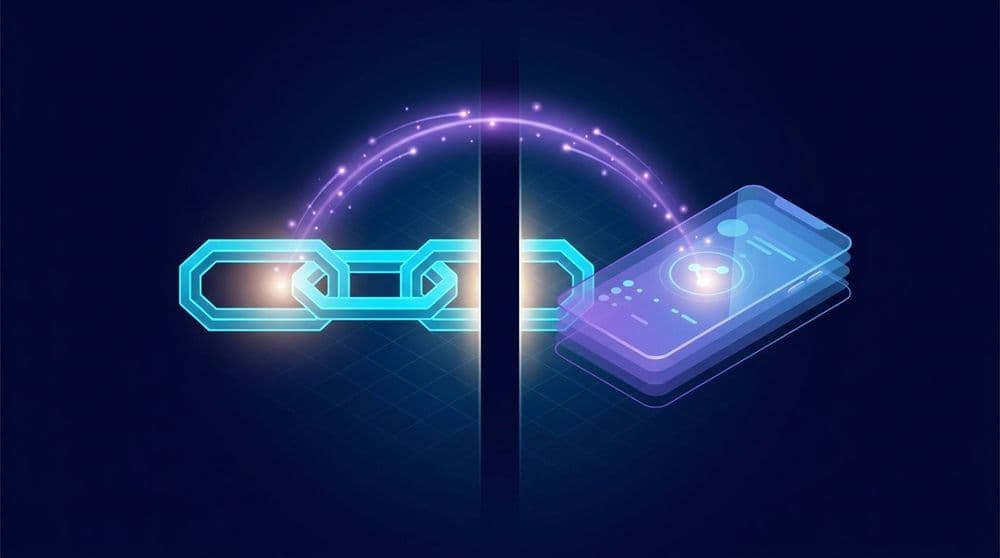
That is the install gap: a real discontinuity between the click and the first app open, with no native channel across it. (Android's Play Install Referrer, covered below, is the one partial exception that deferred matching exploits.) Everything about deferred deep linking is really about building a channel across that gap.
The handshake, step by step
Think of deferred deep linking as a four-step handshake between the click and the first open.
- The click. A user taps your link. Before redirecting them to the app store, a server records the event: the link's destination, a timestamp, and a set of device signals such as IP address, OS version, device model, and screen resolution.
- The redirect. The user is sent to the App Store or Play Store to install your app. This is the gap. Nothing generated in step one is guaranteed to survive it.
- The first open. The user opens your app for the first time. The app's SDK collects a fresh set of signals, its own snapshot of the device, and sends it to the same server that recorded the click.
- The match. The server compares the first-open signals to recent click records and looks for a match within a defined time window. If it finds one with enough confidence, it returns the original destination, and the app routes the user there.
The entire technique lives or dies on step four: how confidently the server can say "this open is the same person as that click."
Deterministic matching: when you can be certain
Deterministic matching uses an identifier that is provably the same across the click and the install, which removes the guesswork entirely. Two mechanisms deliver this:
The Play Install Referrer API on Android lets a freshly installed app read referrer data that Google Play attached at install time. It requires no permission prompt and costs nothing, which makes it the strongest available signal on Android whenever it applies.
A clipboard-based method works on both platforms: before redirecting to the store, the destination or a token is copied to the device clipboard, and the app reads the clipboard back after install. It is accurate because the same literal data crosses the gap, but it depends on clipboard access being available and, on iOS, can prompt a paste notification the user sees.
Probabilistic matching: the fallback that carries most of the load
When no deterministic identifier is available, which is the common case on iOS outside of clipboard flows, matching falls back to fingerprinting: comparing device signals such as IP address, device model, OS version, and screen resolution between the click record and the first open, within a short time window, and accepting the closest match as long as it clears a confidence threshold.
This works, but it is a statistical best guess, not a certainty. Two people on the same office Wi-Fi with similar devices clicking links minutes apart can confuse the system. Since Apple's App Tracking Transparency changes reduced the pool of users with a persistent device identifier, probabilistic matching has become the primary fallback for a much larger share of iOS installs than it used to be, which makes the lookback window you configure a real accuracy lever: a short window (10 to 15 minutes) reduces false matches by shrinking the pool of devices that could collide, while a longer window catches more delayed installs at the cost of more false positives.
Why the matching window matters
The lookback window is the single setting most worth tuning. Most install-to-first-open sessions happen within 15 to 30 minutes of the install completing, so a window sized around that range usually captures the large majority of genuine matches without needlessly widening the pool of devices that could produce a false positive. Widening it much beyond an hour trades a small gain in match rate for a larger increase in misattributed opens.
What this means for your setup
If you are building deferred deep linking yourself, the practical order of operations is: use the Play Install Referrer API on Android as your primary method since it is free and deterministic, use a clipboard method on iOS where you can tolerate the UX of a paste flow, and treat fingerprint matching as the necessary fallback everywhere else, with a lookback window tuned to your actual install-to-open distribution rather than a default you never revisit.
If you are evaluating a managed platform instead, the honest question to ask any vendor is which of these methods they use by default, what their fallback is, and what lookback window they run, since those three answers determine your real-world match rate far more than any headline accuracy claim.
Frequently asked questions
What is deferred deep linking?
Deferred deep linking routes a new user to the specific in-app screen a link was pointing to, even though they had to install the app in between clicking the link and opening it for the first time. It closes the data gap that app store installs create.
How does deferred deep linking work without a native OS API?
It works through a separate matching service: a server records details of the click before the app store redirect, then compares those details to the app's first open after install, using either a deterministic identifier like the Play Install Referrer API or a clipboard token, or probabilistic fingerprinting based on device signals when no deterministic identifier is available.
What is the difference between deterministic and probabilistic matching?
Deterministic matching uses a provable identifier, such as referrer data from the Play Install Referrer API or a clipboard token, to create a certain one-to-one match. Probabilistic matching compares device signals like IP address and OS version within a time window to make a statistical best guess, which is accurate most of the time but not guaranteed.
Why is deferred deep linking harder on iOS than Android?
Android has the Play Install Referrer API, a free, deterministic signal with no permission prompt. iOS has no equivalent native API, and privacy changes from App Tracking Transparency have reduced the number of iOS users with a persistent device identifier, pushing more iOS matching onto probabilistic fingerprinting or clipboard-based methods.
Want deferred deep linking without building the matching handshake yourself?
Ulinkly handles the click recording, the matching, and the fallback logic for iOS and Android. The free tier (up to 10,000 monthly active users) covers standard deep linking and basic tracking; deferred deep linking and attribution are on paid plans from 9 dollars per month. See ulink.ly/pricing.
Sources
- Google Play Install Referrer Library: https://developer.android.com/google/play/installreferrer
- Deferred deep linking overview: https://adapty.io/glossary/deferred-deep-linking/
- iOS deferred deep linking accuracy and ATT impact: https://www.airbridge.io/en/blog/deferred-deeplink-post-idfa-accuracy